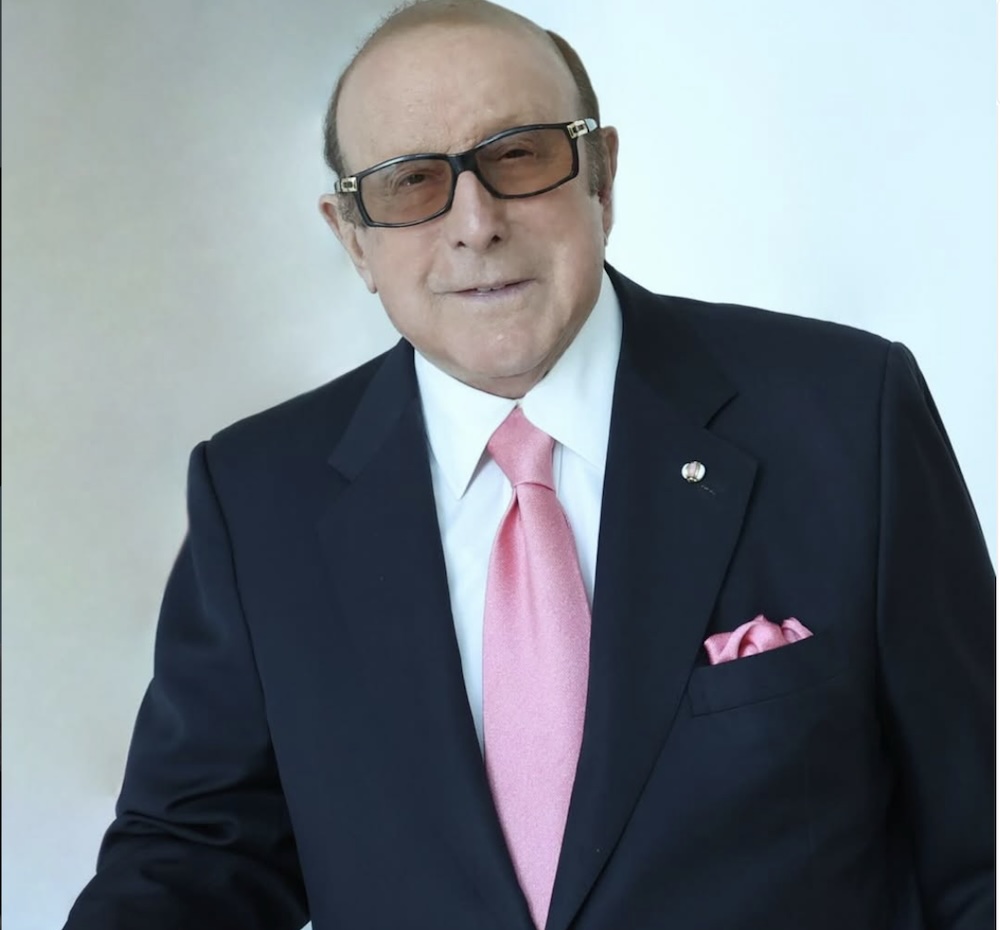
Clive Davis, the Columbia and Arista Records executive who turned the psychedelic era’s wildest acts into chart fixtures and went on doing it for half a century, died on June 22, 2026, at his home in Manhattan. He was 94. His longtime representative, Aliza Rabinoff, said the cause was an age-related illness and that Davis died surrounded by family. He had been hospitalized in late May for a respiratory issue and was released after a few days.
If you grew up on classic rock, his fingerprints are on a fair share of your record collection. Davis signed Janis Joplin, Santana, Aerosmith, and Bruce Springsteen to Columbia. He brought the Grateful Dead and the Kinks to Arista. He guided Aretha Franklin back onto the charts, built a teenage Whitney Houston into the biggest pop star of her era, and launched Alicia Keys. Franklin once called him the greatest record man of all time, and for the artists on that list, the line holds up.
The lawyer who walked into Monterey Pop
Davis did not begin as a music person. He was born in Brooklyn on April 4, 1932, lost both parents while he was young, and put himself through New York University and Harvard Law before taking work as a corporate lawyer. In 1960 he joined the legal department at Columbia Records. By 1967 he was running the place.
That June he flew to California for the Monterey International Pop Festival, and the weekend changed his mind about what the business was. He watched Janis Joplin rip through a set with Big Brother and the Holding Company and signed the band to Columbia. Monterey convinced him that the new rock coming out of San Francisco was not a passing scene but the next center of gravity for the industry, and he spent the following years proving it. He signed Santana in the late 1960s, added Chicago and Blood, Sweat & Tears, and inked Aerosmith at Max’s Kansas City in New York. The band liked the story enough to work a reference to him into their song “No Surprize,” where Steven Tyler recalls Davis promising to make them stars.
Bob Dylan and the John Birch Society
Years before Monterey, Davis’s first real run-in with a Columbia artist cast him not as a champion but as the company censor. In 1963 the label was home to a young Bob Dylan, who wanted “Talkin’ John Birch Society Blues” on his second album, The Freewheelin’ Bob Dylan. The song is a talking blues sung by a paranoid narrator who finds Communists everywhere he looks, and one verse compares the John Birch Society’s politics to Hitler’s. Davis, then a young lawyer at Columbia, ruled the line libelous and told Dylan the song was coming off the record. Dylan was furious. He gave in anyway.
The timing turned a contract dispute into a national story. That same May, Dylan had been booked on The Ed Sullivan Show, the biggest variety program on television, and CBS censors handed him the identical verdict on the identical song. Rather than swap in something safer, Dylan walked off the set, a near-unheard-of move on the most-watched stage in the country. Because Columbia sat under the same CBS umbrella, the label then pulled the track from Freewheelin’ even after early copies had shipped. Dylan turned the setback to his advantage, reworking the album with “Masters of War,” “Girl from the North Country,” and “Talkin’ World War III Blues” in place of older material, and the record was stronger for it.
Davis told the story himself, years later. By his account the two went on to work together cordially, and Dylan probably never connected the powerful executive across the table with the young lawyer who had once delivered the bad news. It is the kind of deep-catalog story we keep chasing across our classic rock series.
Fired, indicted, and back within a year
In 1973, Columbia fired Davis and accused him of misusing company funds. He was charged with tax evasion, pleaded guilty to a single count of failing to pay taxes, and paid a $10,000 fine. The fall did not stick. He founded Arista Records in 1974, and the hits arrived almost immediately: Barry Manilow’s “Mandy” reached number one within months, and over the next 25 years Davis built Arista into one of the steadiest hit operations in music.
The Arista roster is a strange and wonderful list. He signed Patti Smith and put out Horses in 1975. He brought over the Kinks and Lou Reed, nursed Aretha Franklin and Dionne Warwick through career slumps and back to the top of the charts, and signed Whitney Houston in 1983, when she was 19. Her 1985 debut produced three number-one singles and made her, for a stretch, the best-selling pop artist alive.
Arista and the Grateful Dead
For anyone who came up in the jam world, the Grateful Dead are the part of this story that matters most, and they earn their own telling. The short version: in 1976, after the band had left Warner Bros. and spent a few years running their own label, Davis pulled them back to a major by signing them to Arista. Their 1977 label debut, Terrapin Station, opened a relationship that lasted the rest of the band’s run.
On paper it made no sense. Davis was the most commercial executive in the business, and the Dead had built an empire on touring and tape-trading while mostly ignoring radio. He signed them anyway. It helped that Arista already housed Patti Smith and Lou Reed, which gave the label enough rock credibility to reassure a band that distrusted the whole apparatus, and it helped that the Dead were quietly curious about what an actual hit might feel like. Bob Weir caught the mood on stage, reworking a line of “Jack Straw” so the band could joke that they no longer played for love or money but for Clive.
The payoff took ten years. In 1987 the Dead put out In the Dark, their first studio album since 1980, and its lead single “Touch of Grey” became the only Top 10 hit of their career, reaching number nine on the Billboard Hot 100. The video ran constantly on MTV, In the Dark turned into their first million-selling album, and a fresh wave of fans, whom older Deadheads dubbed Touchheads, started showing up at the shows. How the band felt about finally crossing over is a more tangled question, and a good one.
That fuller story, from the Terrapin Station sessions the label pushed them through, to the sell-out debate inside the band, to the contract their lawyer famously crammed onto five pages, runs longer than an obituary can hold. We dig into all of it in our deep dive on the Dead’s Arista years*, part of our wider jam band coverage. It is also the line that ties Davis to the music we still chase now, from players raised in the Dead’s orbit like Warren Haynes to the touring bands carrying the tradition forward.
Supernatural: the comeback he engineered twice
The clearest proof of Davis’s ear came three decades after he first signed Santana. By the mid-1990s Carlos Santana had no label. Davis signed him to Arista and pushed for a record that set his guitar against a lineup of younger pop and hip-hop singers. That album, Supernatural, came out in 1999, sold enormously, and won Album of the Year at the 2000 Grammys. Santana collected eight awards that night, tying the single-ceremony record Michael Jackson set with Thriller. Supernatural is certified fifteen times platinum in the United States and remains one of the best-selling albums ever made. Davis had discovered Santana during the psychedelic era and resurrected him at the close of the century, which is more than most executives manage even once.
J Records, the Grammy parties, and a long third act
In 2000 Davis started J Records and signed Alicia Keys, whose debut, Songs in A Minor, swept the Grammys. He ran the RCA Music Group until 2008 and stayed working in the industry into his nineties. For decades he hosted an invitation-only party the night before the Grammys, an event that often pulled a bigger room than the ceremony itself. He threw the most recent one on January 31, 2026, at the Beverly Hilton, less than five months before he died.
Coming out at 80
In his 2013 memoir, The Soundtrack of My Life, Davis wrote that he was bisexual. He was 80. On Katie Couric’s talk show he said he hoped being open about it might help people better understand bisexuality. He had spent his whole career as one of the most visible people in music, and he chose to add that to the public record near the end of it.
What he leaves
Davis founded the Clive Davis Institute of Recorded Music at New York University in 2003, which means the next generation of the business learns under his name. He won five Grammys of his own and was inducted into the Rock and Roll Hall of Fame as a non-performer in 2000.
The tributes came, fittingly, from the artists he made. Bruce Springsteen, whom Davis signed to Columbia in 1972, wrote that Davis had treated him with the same respect as an unknown 22-year-old that he showed once Springsteen was famous, and called him a great man. His family said music stayed at the center of his life to the end, and that to them he was simply Dad and Granddaddy.
He is survived by his children and grandchildren.
* Coming soon.