I have known for a long time that my cousin Mark Soskin played piano in Sonny Rollins’ band for twenty years. As a music fan, that always meant something. Two degrees of separation from one of the true giants of American music.
When the news broke that Rollins had passed at age 95 in May of 2026, I reached out to Mark to offer my condolences. I told him I was going to write something for InternetFM and asked if he had a memory he’d be willing to share. He got back to me in less than an hour.
“About my experience with Sonny, I can tell you that it was amazing. I auditioned for him, I thought there would be a band there. No, it was just me and him. We played a few tunes and after he told me I was in the band. The next day we did four nights at the Great American Music Hall in San Francisco where I lived at the time. And, Tony Williams on drums and Donald Byrd on trumpet! Unreal! That record is Don’t Stop the Carnival.”
— Mark Soskin, pianist
I read that several times.
He walked into an audition expecting a full band and found himself alone in a room with Sonny Rollins. They played a few tunes. Rollins told him he was in. The next day – not next week, the next day – he was onstage at the Great American Music Hall in San Francisco with Tony Williams on drums and Donald Byrd on trumpet. Four nights. The record is Don’t Stop the Carnival, and if you have not heard it, fix that today.
That story tells you everything about how Rollins operated. He trusted his ears completely. He moved fast. No committee, no second-guessing. He heard what he needed to hear in that room with my cousin, and that was enough.
Who Was Sonny Rollins?
Sonny Rollins was born in Harlem in 1930 and came of age in the bebop era, recording with Miles Davis and Thelonious Monk before he was twenty-five. He was known as the Saxophone Colossus – the title of his landmark 1956 album – and it was not hyperbole. He was not simply one of the great saxophonists. He was one of the defining voices in the entire American musical tradition, a player whose influence reached across bebop, hard bop, calypso, and free jazz without ever losing the thread of who he was.
He kept recording and performing for seven decades. He stepped away when he needed to deepen the work. He came back when he was ready. He did that more than once, and every time he returned, the music was worth the wait.
The Records You Need to Hear
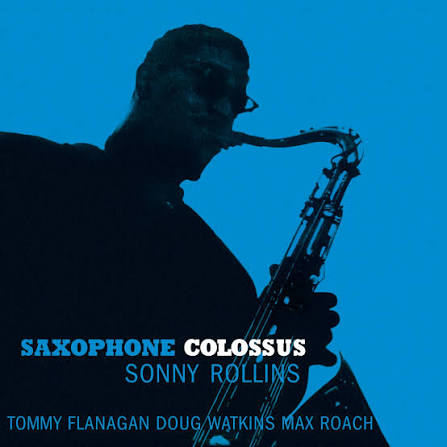
Saxophone Colossus (1956) is the place to start. Recorded in a single session, it contains “St. Thomas” – a calypso-inflected melody that became one of the most recognizable pieces in jazz – and a version of “Moritat” (better known as “Mack the Knife”) that strips the Broadway arrangement down to its bones and rebuilds it as pure improvisation. The album sounds as alive today as it did seventy years ago.
Way Out West (1957) is the other essential early record. Rollins recorded it in Los Angeles with drummer Shelly Manne and bassist Ray Brown – no piano, no chords underneath him, just the saxophone carrying everything. The freedom that came from that format suited him completely. “I’m an Old Cowhand” should not work as a jazz vehicle. It absolutely does.
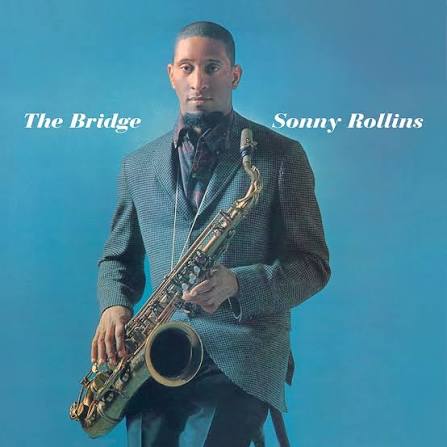
The Bridge (1962) is the record that came after he disappeared. Between 1959 and 1961, at the height of his fame, Rollins stopped performing publicly and spent two years practicing alone on the Williamsburg Bridge in New York. Away from audiences, record labels, critics, and the whole machinery of the music business. When he came back, The Bridge was the result. It sounds like a man who understood that the work itself was the point, not the recognition.
What We Did at Acid Flashback
After I read Mark’s message, I went into the Acid Flashback radio library – the collection we have been building at InternetFM around the idea that jazz, fusion, psychedelia, and world music belong together – and I added three Rollins records: Sunny Days, Starry Nights, Reel Life, and No Problem. They join Miles Davis, Herbie Hancock, Al Di Meola, Bob James, Django Reinhardt, John McLaughlin, Keith Jarrett, and Sergio Mendes in a collection that keeps growing because the music keeps demanding it.
Don’t Stop the Carnival is going in too.
It felt like the right thing to do. It felt like the only thing to do.
A Final Note
Sonny Rollins was 95. His health had kept him off the stage for the better part of the last decade, the physical demands of the instrument becoming too much. But the recordings are everywhere, and they do not age.
My cousin spent twenty years in that orbit. The fact that he got back to me in less than an hour when I asked him to share a memory says something about Mark. The memory itself says everything about Sonny.
Put on Don’t Stop the Carnival. Let it play.
Meta Title: Sonny Rollins Dead at 95: A Tribute to the Saxophone Colossus
Meta Description: Jazz legend Sonny Rollins has passed away at 95. InternetFM’s Steve Leventhal shares a personal tribute, including a first-hand memory from pianist Mark Soskin, who played with Rollins for twenty years.
Slug: sonny-rollins-dead-95-saxophone-colossus-tribute