Roger Hodgson and Rick Davies may have been the driving force behind the English rock group Supertramp, but the unique sound of the band wouldn’t have been the same without Dougie Thomson’s bass riffs, Bob Siebenberg’s drums and percussion, and most importantly, John Helliwell’s well-placed saxophone and clarinet solos.
From Clarinet Lessons to “Have Sax, Will Travel”
Helliwell got his start in music at age thirteen, when he bought his first clarinet and discovered modern jazz. Two years later, he purchased a saxophone. After an initial foray into the world of computer programming, it didn’t take long for him to return to music, where he played with various “amateur groups,” as he described them. After moving to London in 1965, he placed an ad in Melody Maker entitled “Have sax, will travel.”
“I got a reply from this group called the Allen Bown Set. And I joined them in 1965 or so and stayed with him for about six years. One of the very last bass players that was in that group was Dougie Thompson. And then I went in the early 70s, I did other jobs, just working in strip clubs, working with backing American singers who came over to our country, like Jimmy Ruffin, Arthur Connolly, etc. And then in 1973 I was working in Germany playing American airbases, and I got a telephone call from Dougie, the bass player, who’d already joined Supertramp from an audition about a year previously. And he said, ‘Would you like to come and have a play with us?’ And I said, Well, I’m in Germany, but I’m thinking of packing it in.'”
He hopped a flight home, drove down to see what all the fuss was about, and never looked back. It was July of 1973, and Supertramp, two albums in, art-school ambitious, and virtually unknown, was in the middle of remaking itself. Roger and Rick had already been writing together for years, but the band that would make Crime of the Century first had to become a band, and that meant living like one. The five of them moved into a house in the English countryside and simply worked the songs out together, week after week.
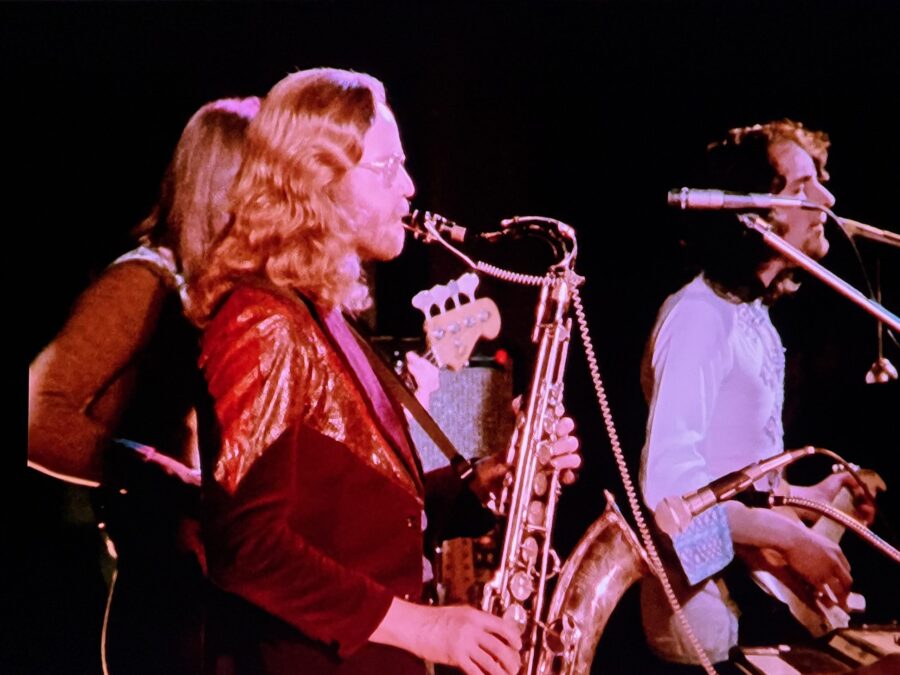
“They’d come in, and they’d play their songs, which would have been going for years, some of them,” Helliwell told me, “and we’d all just play the song along with them, and then anyone would put in what they thought about it or whatever. And everything was just organic in the way it all just melded together.” Roger and Rick brought the bones. The rest of the band put the meat on them. Which is why nearly every one of Helliwell’s solos on that record came off the top of his head, cut live, usually on the first or second take. “You get the best vibe,” he said.
The John Helliwell Interview: A Full-Circle Moment
I have my own relationship with that album, for what it’s worth. Back in college, one of my buddies had a friend who sold stereo equipment at the best shop in town, the kind of place with Macintosh amplifiers and turntables that cost more than my car. Every so often, on a slow Friday, he’d wave us into the glass-enclosed side room where all the serious, high-end gear was on display. He’d close the door, and crank up the volume on speakers I could never afford, and drop the needle on side one of Crime of the Century, beginning with “School”. Again, and again, and again. I still own a vinyl copy, and not some later reissue, and forty-plus years on, it remains one of my favorite sides of music ever pressed. So when John Helliwell got on the phone with my son Eric and me this summer, it was something of a full-circle moment.
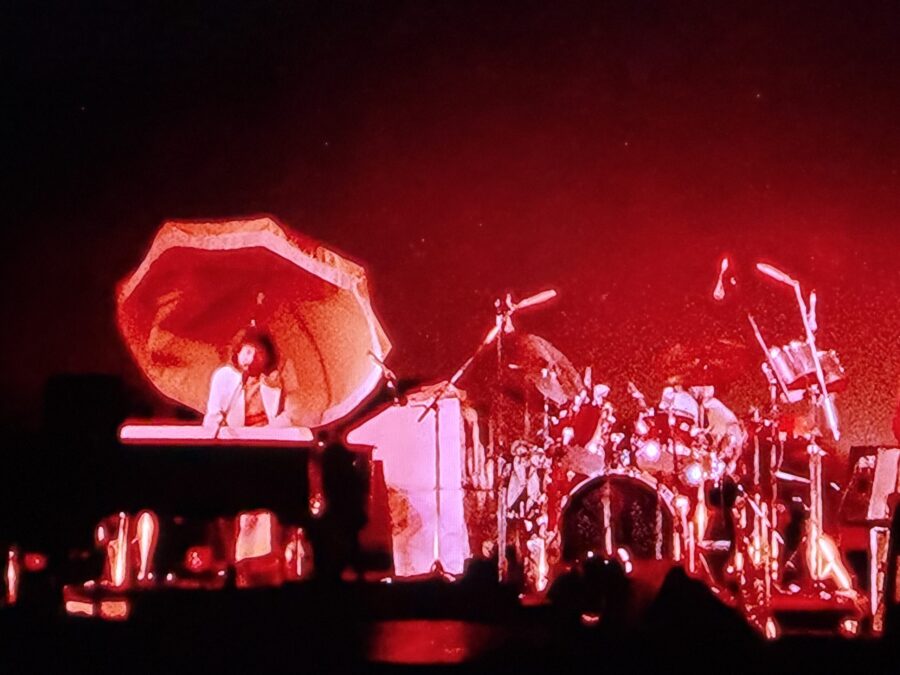
Which brings us to the reason for the call. In honor of the recent golden anniversary of Crime of the Century, a long-lost concert film from the band’s Hammersmith Odeon show (their final UK date before the whole operation relocated to America the following month) has finally been restored. Supertramp’s Crime of the Century: In Concert at the Hammersmith Odeon 1975 was released on Blu-ray by Mercury Studios on May 29, 2026. The band opened with all of side one and closed the night with all of side two, bridging the two halves of the record with a handful of outtakes from the Crime sessions that would later be released on Crisis? What Crisis?. Keep an eye out for the umbrella from that album’s cover. It’s about the only prop on an otherwise bare stage. Supertramp let the music speak for itself.
Finding His Voice as Supertramp’s Frontman
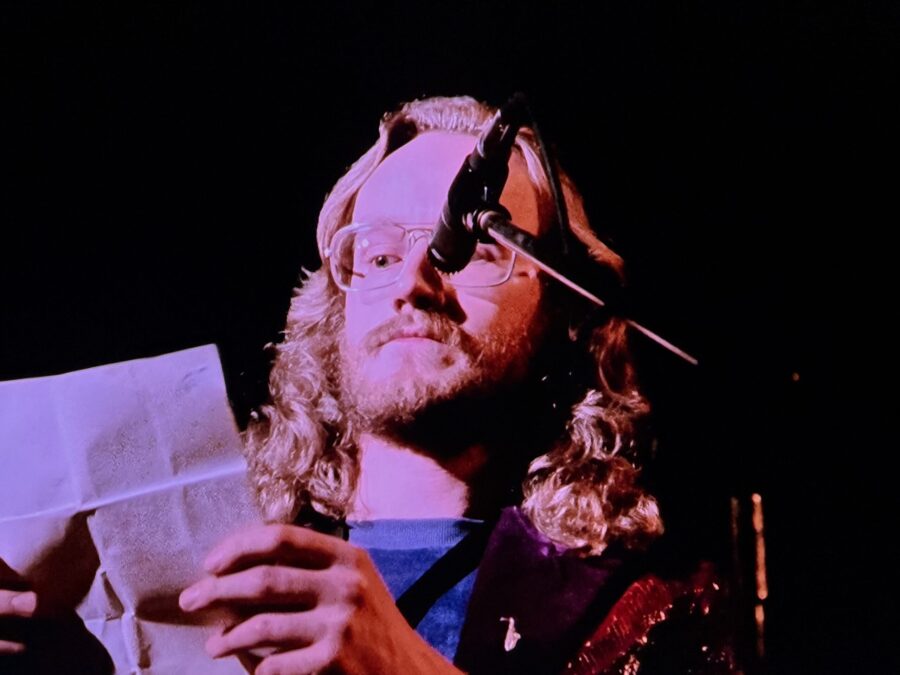
The band, however, needed someone to speak for them. And as fortune would have it, that duty fell to John. There are several moments throughout the film where John speaks to the audience, telling a story about the next composition or some factoid about the band while the other members tuned up or adjusted settings on their instruments. We asked ourselves, and later John himself, how he got that duty rather than either of the principle songwriters in the group. “Bob’s behind the drums, so it’s more difficult to be a presenter. Dougie Thompson was from Scotland, and half the time nobody could tell what he was talking about. And the two songwriters, well, they’ve got a lot to say about life and about things, but they say it all in their songs. Each one of them was kind of slightly shy and didn’t really want to talk to the audience. So it just fell to me. It wasn’t something I was pushing for. It’s like a big hole in the road, and you just fall into it.” Watch the footage now, and it’s plain he made the most of it: warm, funny, self-effacing patter that took the edge off songs that were, by design, pretty heavy.
Restoring a Lost Night at the Hammersmith Odeon
Getting the film out took decades and a persistent manager. “It was through the efforts of Dave Margereson, who unfortunately died last year,” Helliwell said. “He was quite instrumental in trying to get previous older things done, half-speed masters of the recordings, that kind of thing, and he’d been pushing for this for a long time.” Original engineer Ken Scott, who tracked the show back in the day, returned to remix it, and Helliwell first saw the results in a small London theater with Scott sitting beside him. “The sound was great, and I thought the film puts the sort of youthful enthusiasm across, you know. I got a real good feeling from it that I’d kind of forgotten about.” It helps that it was shot on actual film rather than videotape, which gives it a texture that digital transfer cannot quite replicate. Watching himself work that stage, Helliwell counts off alto, tenor, and baritone sax, clarinet, melodica, and a small arsenal of early string synths and a Moog. The keyboards were mostly Rick’s department, though Helliwell picked up a few notes on the Hammond himself. Later in the set he even sits down for a brief, charmingly unpolished piano solo, a tune, he told us, that his cousin Barry brought round the house when he was nine years old, back in 1954, and that he’s been fond of ever since without ever quite learning the proper chords.
Why Hodgson Left, and What Supertramp Lost
Any conversation with a member of that lineup eventually circles back to Hodgson and Davies, and why the partnership that produced Crime of the Century and Breakfast in America would fall apart eight years later. Helliwell’s version doesn’t cite the usual “creative differences” euphemism. Hodgson, by his account, was always the restless one. During the Crime of the Century sessions in ’73, Helliwell says, “we had to almost physically restrain him from going to India.” After Breakfast in America turned the band into a genuine phenomenon, the numbers simply stopped working for him. “He claimed he had about forty tunes, and he wasn’t getting enough of his songs out. It’s only four tunes every year or two. So he decided, after the next album, maybe he wanted to leave.” The band toured behind their next record in 1983, Hodgson announced his departure mid-tour, and Supertramp carried on without him, first with Brother Where You Bound, in what Helliwell calls “a more serious vein.” Losing that push and pull cost the band something real, he admits: “It didn’t have the sort of duality.” I’d argue the Rolling Stones make the same point in reverse. Jagger plus Richards on their own have never once equaled the Rolling Stones. Some chemistry only exists as chemistry.
Remembering Rick Davies
The conversation turned more somber when we asked about Rick Davies, who passed away in September 2025. His passing was part of the impetus, in fact, for finally getting this footage out into the world. Helliwell was pretty straightforward: “Rick is the finest musician I’ve ever worked with,” he stated.
“A self-taught musician, not one to ever write down music, not one to go around sitting in with other people. He was always just doing his own thing.” He offered up one memory in particular: the famous saxophone solo that closes the title track of Crime of the Century. Helliwell had cut a solo he loved, but once the string arrangement came back from the outside arranger and got laid into the mix, his part no longer fit. “So Rick and I sat down together and composed a solo that had little bits of some of the tunes on the album woven into it. I just remember sitting with him for a while, working it out. That was a good time.” That patched-together solo, born out of a studio problem the two of them solved side by side, is the one horn part that really stands out.
Sax for Hire: Sessions with Gilmour, Thin Lizzy, and Beyond
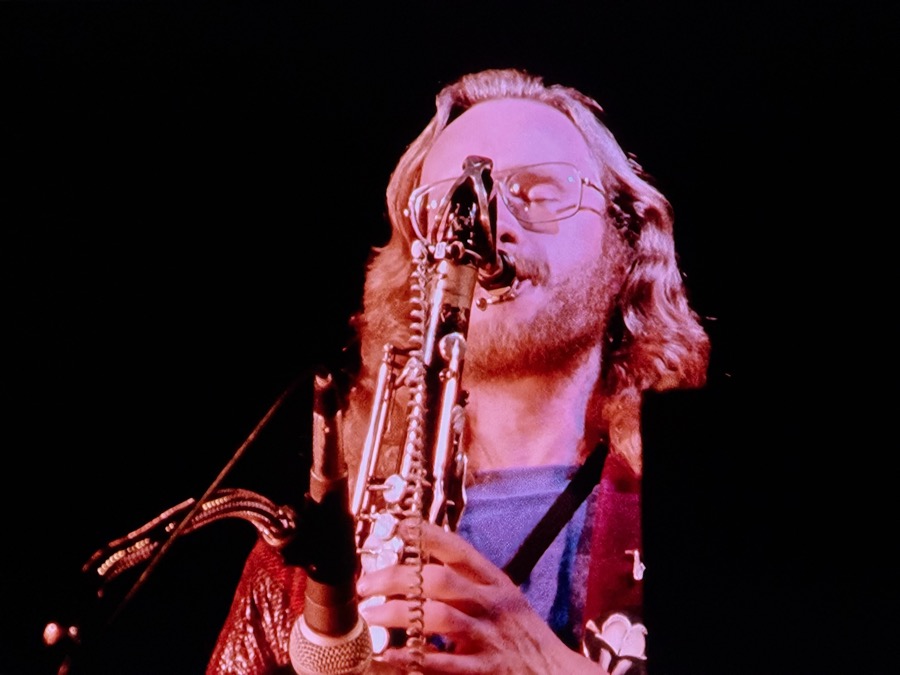
Helliwell’s saxophone and clarinet have turned up in plenty of other places over the years. There was a session with Dave Gilmour on a Pink Floyd record, and a memorable night in Toronto when Thin Lizzy happened to be recording down the street with producer Tony Visconti. (There’s a family connection there: Bob Siebenberg’s wife is the sister of Thin Lizzy guitarist Scott Gorham.) “They said, ‘You’ve got a night off, do you want to come down and have a blow?” Helliwell recalled, and he ended up on a couple of tracks, including “Dancing in the Moonlight.” There were sessions with Diana Ross and Johnny Mathis along the way too, and these days, well into what he calls his “semi-retirement,” he still crosses the Channel regularly to sit in with musicians in France and Germany, on top of a few solo records of his own. His retirement plan, such as it is, is refreshingly simple: “I plan to play as long as I can play well. If I feel like my plane’s going down, I’m gonna stop.” As of this conversation, the plane’s still climbing.
The Night It All Went Wrong at Montreux
He left us with one more story, the kind that only comes out once the tape’s about to stop rolling. The closer on Crime of the Century builds to a brutal top B on tenor sax, a note that gave Helliwell trouble even in the studio, where the album version is actually a slowed-down take of an easier top A. Live, with monitors bouncing sound in from every direction, pitch could get away from him. It did, once, spectacularly, at the Montreux Jazz Festival. “We call it a train wreck,” he laughed. “We were quite embarrassed about it all, because Emerson, Lake & Palmer were there. They’d been listening to us, and we’d been listening to them.” I told him I was having a hard time picturing anything embarrassing Keith Emerson, of all people. He just laughed harder.
More Rock Legend interviews from Internetfm
thanks to Eric Leventhal for his contributions to this story.