
by Steve Leventhal
Rush are one of the greatest live bands in rock history. Over a career spanning more than five decades, they have played thousands of concerts across North America, Europe and beyond, known for elaborate stage productions, note-perfect musicianship, and a stubborn insistence on making the sound themselves. For most of their career, three people made that sound. Every night.
If you have ever seen Rush live, you already know. If you haven’t, here is what you have been missing, and why this is the week to pay attention.
What Made Rush Different as a Live Band?
For most of their career, Rush performed as a trio with no additional touring musicians and no safety net. Everything you heard on the record, the synthesizer parts, the bass pedals, the guitar harmonics, the drum fills, was played or triggered live by three people on a stage. Geddy Lee played bass, sang lead vocals, operated keyboard rigs with his hands, and triggered synthesizer sequences with his feet using bass pedals, simultaneously. Alex Lifeson handled guitar parts that would require two players in most bands. Neil Peart played one of the most complex drum kits in rock, surrounded by orchestral percussion, electronic pads, and custom instruments he designed himself.
The question audiences asked walking out of a Rush show was always the same: how did three people do that?
The Early Tours: Building the Fanbase
Rush spent the early 1970s doing exactly what every band does when nobody knows their name: playing anywhere that would have them. Ontario high school gyms, small clubs, bar circuits across Canada. By the time the self-titled debut came out in 1974, they had already logged hundreds of shows and were a locked-in live unit.
The 2112 tour in 1976 was the turning point. The album had connected, the audiences were growing, and Rush culminated the tour with a three-night stand at Massey Hall in their hometown of Toronto. Those shows were recorded and released as All the World’s a Stage (1976), the first of what would become a career-long tradition of live album documentation. The record went double platinum. Rush was now a touring force.
The Hemispheres and Permanent Waves Era
The late 1970s tours behind A Farewell to Kings and Hemispheres pushed the production values higher. Rush began incorporating film projections, elaborate lighting rigs, and stage setups that dwarfed what most bands their size were doing. The content of those projections, science fiction imagery, philosophical themes, visual extensions of Peart’s lyrics, gave the shows a conceptual coherence that separated them from standard rock concerts.
Exit… Stage Left (1981), recorded during the Permanent Waves and Moving Pictures tours, is the essential document of this period. It captures Rush at the peak of their progressive era live powers, with "YYZ," "Tom Sawyer," "Xanadu," "The Spirit of Radio" and "La Villa Strangiato" all performed with a precision and energy that the studio records could only approximate.
The Spectacle Years: 1984-1992
The synth era brought increasingly theatrical productions. The Grace Under Pressure tour featured a stage design built around the album’s themes of tension and confinement. The Power Windows and Hold Your Fire tours pushed the visual production to arena-filling scale, with video screens, elaborate lighting systems, and stage sets that required multiple trucks to transport.
The humor crept in too. Rush mixed comedic video segments into their shows, and in later years the stage even featured rotisserie chicken ovens, which became one of the more memorable running jokes in rock touring history. The band was selling out arenas, the productions were enormous, and they were clearly having a good time.
A Show of Hands (1989) documents this era well, a live album recorded across the Hold Your Fire tour that captures the synthesizer-heavy Rush in full flight.
Test for Echo and the Long Road Back
The Test for Echo tour in 1996 and 1997 was interrupted by Neil Peart’s personal tragedies. The shows that were completed were strong (Rush was always strong live), but the tour ended early, and the band went dark for five years.
When they came back for Vapor Trails in 2002, something had shifted. The shows were leaner, more direct, less reliant on elaborate production. Peart was playing with a new intensity. He had spent the hiatus studying with jazz instructor Freddie Gruber and had rebuilt his technique from the ground up. The drumming on the Vapor Trails tour sounded different from anything he had done before. Harder, more fluid, less mechanical.
Rush in Rio (2003), recorded at Maracanã Stadium in front of approximately 40,000 people, is the best document of this period. The crowd response, Brazilian fans singing every word of every song back at the band, is one of the more remarkable things captured on a live rock record.
The R30, Snakes and Arrows, and Time Machine Tours
The anniversary tours of the mid-2000s gave Rush the opportunity to revisit catalog they had not played in years. The R30 tour in 2004 and 2005, celebrating thirty years with Neil Peart, brought back deep cuts that longtime fans had been waiting a long time to hear in an arena.
The Snakes and Arrows tour (2007-2008) and Time Machine tour (2010-2011) continued the pattern: strong productions, deep catalog selections, and a band that showed no signs of decline. Time Machine 2011: Live in Cleveland captures Rush performing Moving Pictures in its entirety, followed by a career-spanning set. It is the best single-document introduction to Rush as a live band.
The Clockwork Angels Tour
The Clockwork Angels tour (2012-2013) was the most ambitious production of their career. Rush performed the entire Clockwork Angels album backed by a full string ensemble, the Clockwork Angels String Ensemble, arranged by David Campbell, for select dates. The combination of the trio’s live power and a twelve-piece string section playing parts written specifically for the tour produced something that had no precedent in Rush’s catalog.
For the non-orchestra dates, the production was equally strong. The visual presentation built around the steampunk aesthetic of the album was the most cohesive stage design Rush had ever assembled.
The R40 Live Tour: The End of an Era
Rush announced the R40 Live tour in 2015, celebrating forty years with Neil Peart. What they did not announce, and what became clear only afterward, was that it would be the last tour with Peart behind the kit.
The stage design told the story in reverse. The production began with the elaborate modern setup and, as each night progressed, stripped back in time, earlier eras of equipment, earlier visual styles, earlier songs, until by the end of the show the stage looked like it might have in 1974. Three people, the music, and not much else.
Peart had been dealing with tendinitis in his shoulders and wrists for years. The physical demands of his kit, one of the largest and most complex in rock, had become unsustainable. The R40 tour was his way of finishing on his own terms.
R40 Live (2015) is the document. It is a generous, emotional record of a band that chose to close that chapter well. Neil Peart died on January 7, 2020.
Rush Are Back
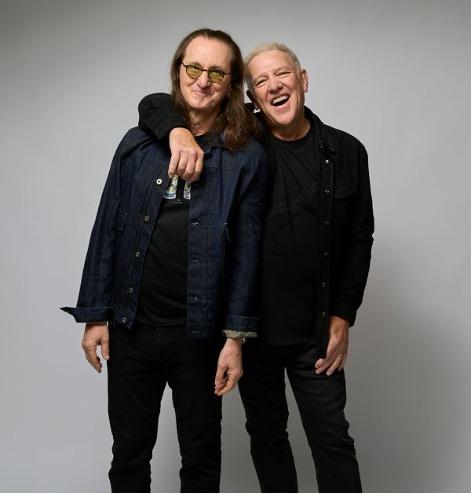
On June 7, 2026, Rush walked onto the stage at the Kia Forum in Los Angeles, the same building where the R40 tour ended in 2015. It was their first show in eleven years and their first outing without Neil Peart in 52 years. Geddy Lee and Alex Lifeson are joined by drummer Anika Nilles and keyboardist Loren Gold. They opened with "Xanadu," a song that had never opened a Rush set before.
The band says the Fifty Something tour has sold more than a million tickets. It is currently set to run through April 10, 2027 in Helsinki.
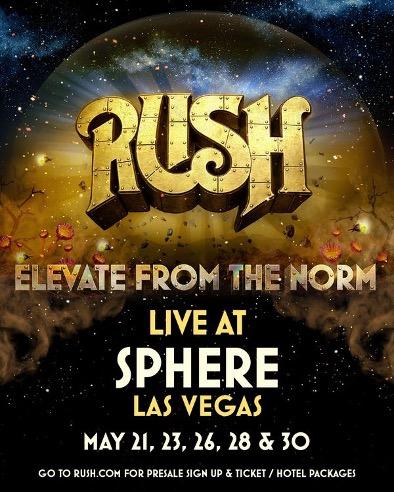
Now comes Sphere. This week Rush announced five shows at Sphere Las Vegas called "Elevate From the Norm," a nod to a lyric in "Vital Signs." The dates are May 21, 23, 26, 28 and 30, 2027. Lee says the band will play all of 2112 and all of Moving Pictures, along with other songs, with new visuals built for the venue. Rush, he says, is now "living and touring in the present tense."
How to get in:
- Fri Nov 6, 10 AM PT: a two-hour window for RUSH Backstage and RUSH Newsletter subscribers for VIP and travel packages (everyone else at noon PT).
- Wed Nov 11, 10 AM PT: artist presale (register through Seated).
- Fri Nov 13, 10 AM PT: general on-sale.
Superfan is offering VIP packages at the Fontainebleau Las Vegas, some with a chance to meet Geddy and Alex, plus travel packages for every show. Everything official is at rush.com/sphere.
If you read this history and thought the story ended in 2015, it didn’t.
FAQ
Q: Is Rush touring again?
Yes. Geddy Lee and Alex Lifeson returned as Rush in 2026 for the Fifty Something tour with drummer Anika Nilles and keyboardist Loren Gold. It opened June 7, 2026 at the Kia Forum in Los Angeles and is currently set to run through April 10, 2027 in Helsinki. Rush also announced five shows at Sphere Las Vegas on May 21, 23, 26, 28 and 30, 2027.
Q: How many concerts has Rush performed?
Rush has performed more than 2,000 concerts since the early 1970s, and the current tour keeps adding to that number.
Q: Did Rush use backing tracks live?
Everything was played or triggered live by the band, including synthesizer sequences triggered by Geddy Lee’s bass pedals. For most of their career Rush toured with no additional musicians.
Q: What is Rush’s best live album?
Rush’s most essential live albums are Exit… Stage Left (1981), which captures the progressive era, Rush in Rio (2003) for the emotional comeback period, and Time Machine 2011: Live in Cleveland as the best single introduction to Rush as a live act.
Q: Did Rush ever perform with an orchestra?
Yes. During select dates on the Clockwork Angels tour (2012-2013), Rush performed with the Clockwork Angels String Ensemble, a twelve-piece string ensemble with arrangements by David Campbell.
Q: What is Rush’s most famous live performance?
Rush’s three-night stand at Massey Hall in Toronto in 1976, documented on All the World’s a Stage, is among their most celebrated. Rush in Rio (2003) at Maracanã Stadium in front of approximately 40,000 fans is frequently cited as the most emotionally powerful document of the band live.
Q: Why did Rush stop touring after 2015?
Largely because of Neil Peart’s physical health. Years of tendinitis in his shoulders and wrists made the demands of his complex drum kit unsustainable. Peart died of brain cancer on January 7, 2020. In 2025, Lee and Lifeson announced their return with Anika Nilles on drums.

