Genesis are a British rock band formed in 1967 at Charterhouse School in Surrey, England. Over a career spanning more than five decades, they evolved from art rock and progressive pioneers into one of the best-selling pop acts of the 1980s. The change was so complete that fans of the early catalog and fans of the later hits often seem to be talking about entirely different bands. They are both right.
Most people know Genesis from “Invisible Touch,” “Land of Confusion,” or “In Too Deep.” Those are fine songs. But they are the end of a story that began somewhere far more interesting: in a British boarding school in the late 1960s, with a group of teenagers who had read too much literature and were trying to make music that matched their ambitions. This Genesis band history follows the whole journey, from those first schoolboy songs to the stadium tours.
Where Did Genesis Form?
Genesis formed in 1967 at Charterhouse School in Godalming, Surrey. The founding members, Peter Gabriel, Tony Banks, Mike Rutherford, Anthony Phillips and Chris Stewart, were students who bonded over a shared interest in music that was more ambitious than what was on the radio. They recorded a demo tape and sent it to producer Jonathan King, himself a Charterhouse alumnus, who signed them and suggested the name Genesis.
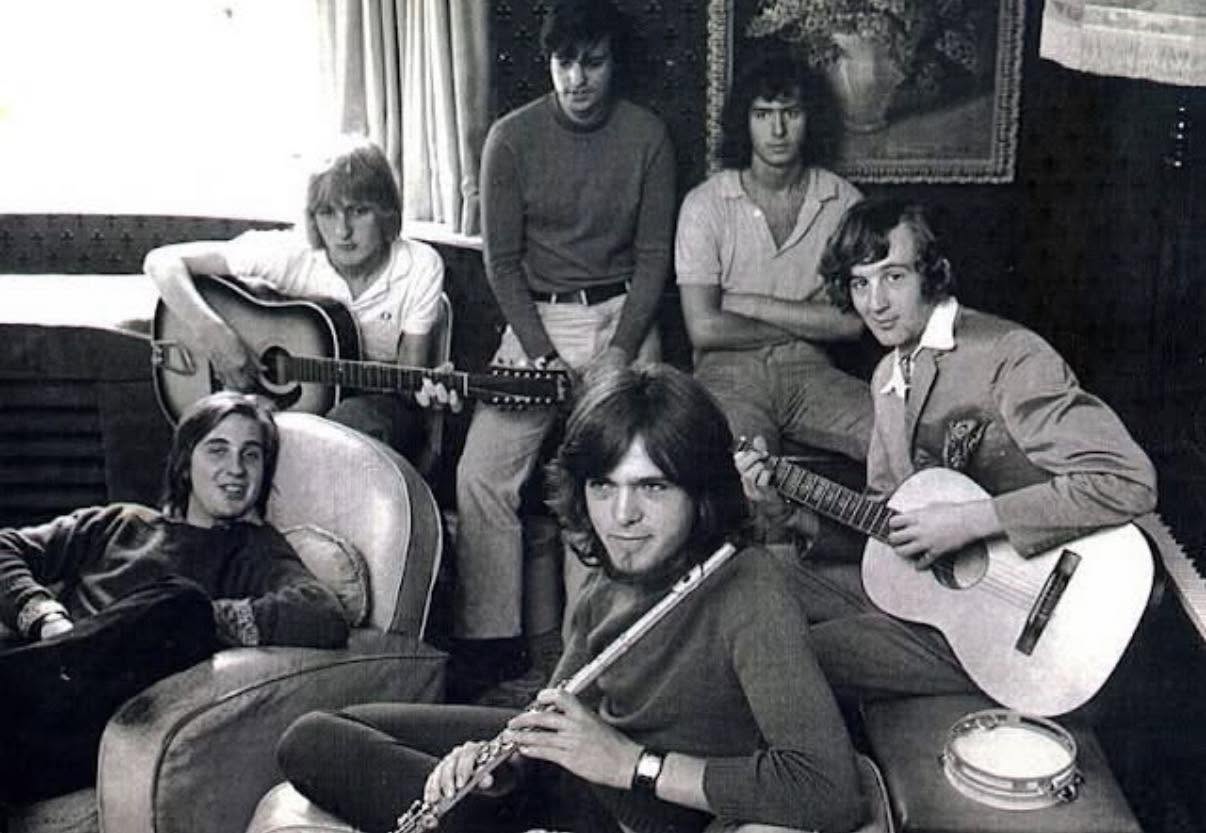
The early records, From Genesis to Revelation (1969) and Trespass (1970), found the band searching for a sound. Trespass is where it started to cohere. The extended pieces, the acoustic and electric contrasts and the literary ambition in the lyrics all pointed toward what was coming. Drummer John Mayhew and guitarist Anthony Phillips departed after Trespass, and the replacements changed everything.
The Classic Lineup Takes Shape
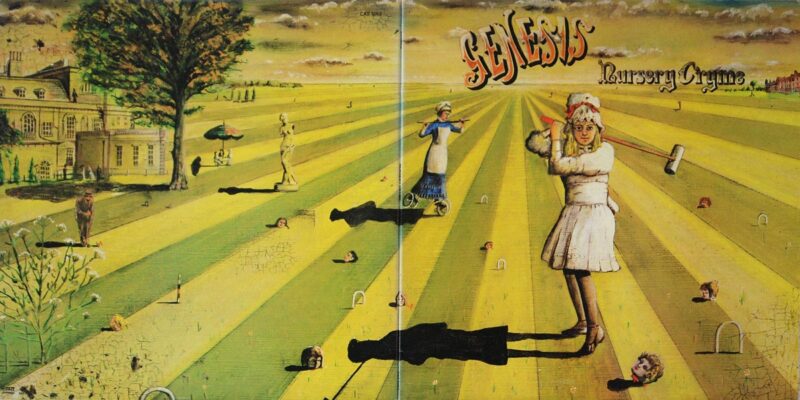
Phil Collins joined as drummer in 1970. Steve Hackett joined on guitar shortly after. The lineup of Gabriel, Banks, Rutherford, Collins and Hackett recorded Nursery Cryme (1971) and Foxtrot (1972), the two albums that established Genesis as a genuine force in progressive rock.
Foxtrot contains “Supper’s Ready,” a twenty-three minute piece that moves through seven distinct sections, drawing from the Book of Revelation, Greek mythology and science fiction. It is one of the most ambitious compositions in rock history and it works completely. If you have never heard it, that is the place to start with early Genesis. Skip the singles and the compilation and listen to all twenty-three minutes from beginning to end.
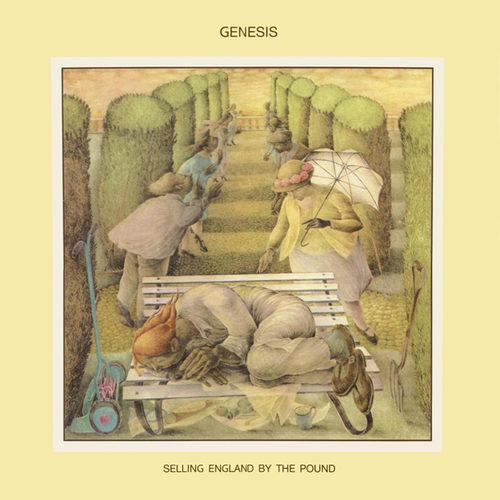
Selling England by the Pound (1973) followed and is widely considered the peak of the Gabriel era. It reached No. 3 in the UK and contains “Firth of Fifth,” “The Cinema Show” and “Dancing with the Moonlit Knight,” three pieces that show what Genesis could do when everything was working.
How Peter Gabriel’s Stories Became a Legend
Here is something many casual Genesis fans don’t know: the between-song storytelling that became one of the most celebrated parts of a Genesis show started as a practical fix. The band’s instruments had to be retuned between songs, and those gaps could run long. Gabriel stepped up to the microphone and filled them by talking to the audience.
The stories were surreal, funny and dreamlike, and over time they grew into a body of spoken narrative as distinctive as anything Genesis put on record. One of them, printed on the back cover of Genesis Live (1973), caught the eye of William Friedkin, the director of The Exorcist, who was interested in working with Gabriel on a film. That is how far a way of covering dead air had traveled.
The costumes followed. The fox head, the flower mask, the bat wings and the old man makeup for “The Musical Box” turned the shows into theater.
The Lamb Lies Down on Broadway and the End of an Era
The Lamb Lies Down on Broadway (1974) was the culmination of everything Gabriel had been building toward: a double album concept record about a Puerto Rican street kid named Rael navigating a surreal underworld beneath New York City. Gabriel wrote the story and the band wrote the music around it. The tour was the most elaborate theatrical production Genesis had attempted, with slide projections and costume changes.
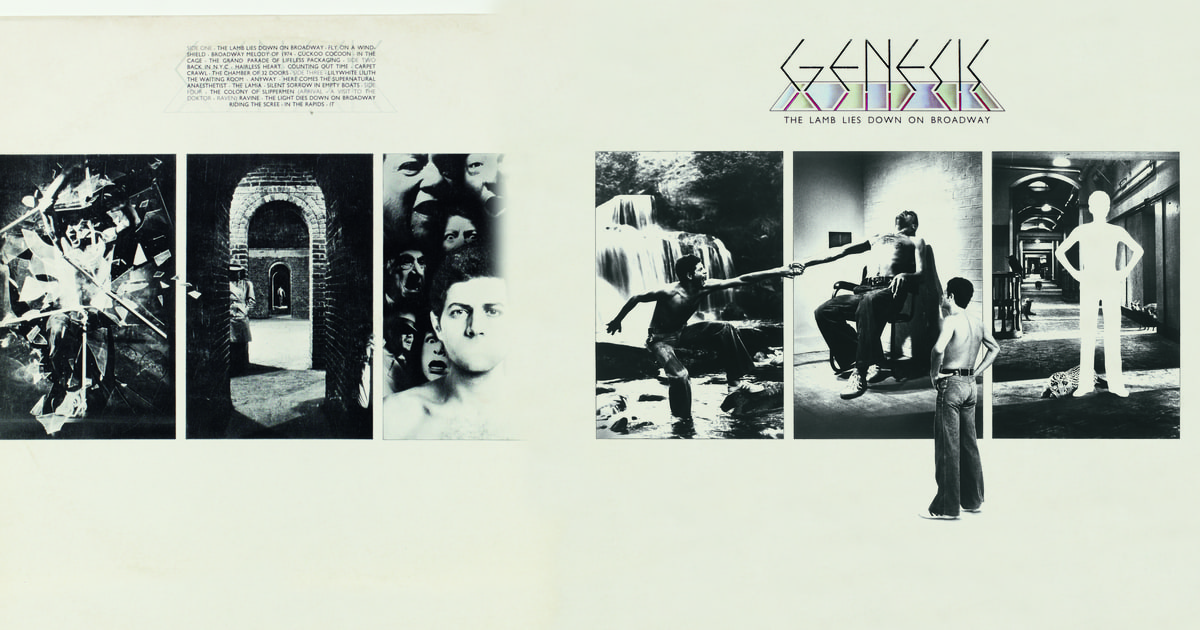
The Lamb is also one of the great live Genesis experiences. Soundboard recordings from the tour circulate among collectors, and I have heard different shows that each have their own unique characteristics. My favorite is the live performance on the box set Genesis Archive 1967-75, recorded at the Shrine Auditorium in Los Angeles on January 24, 1975. Gabriel tells the story of Rael as the show goes on, and it makes the album feel like a stage play.
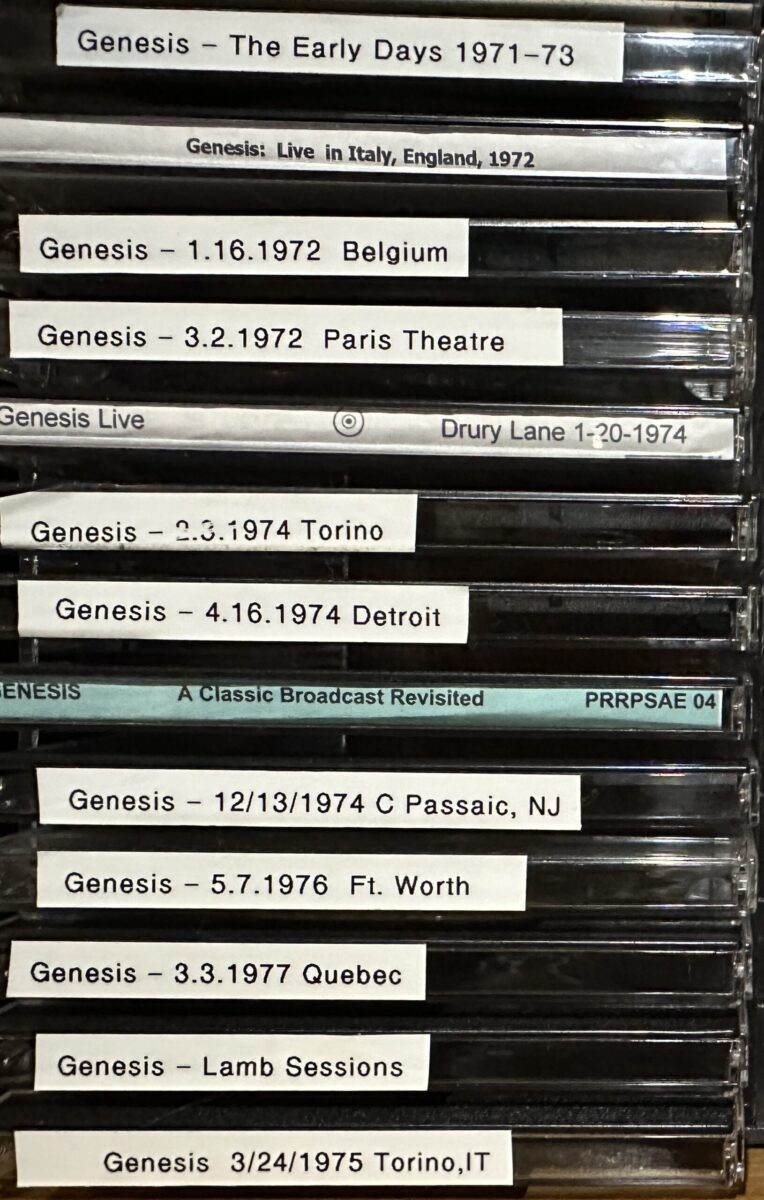
It was also the last thing they did together.
Why Did Peter Gabriel Leave Genesis?
Gabriel decided to leave during the Lamb tour, finished it, and departed in 1975. Several things pulled him away. His wife Jill had a difficult pregnancy during the recording, and Gabriel wanted to be with his family. Friedkin’s film project had already drawn his attention away from the band. And tensions inside the group were high.
The departure was genuinely shocking at the time. Genesis without Gabriel seemed inconceivable. What happened next was one of the great unexpected turns in rock history.
Phil Collins Steps Forward
The band placed an ad in Melody Maker looking for a singer and received hundreds of replies. None of them worked. Collins had been singing harmonies and the occasional lead part for years, and he spent the auditions teaching the songs to hopefuls. He was persuaded to sing “Squonk” himself, and the result was so strong that he sang the rest of the album. The singer had been in the room all along.
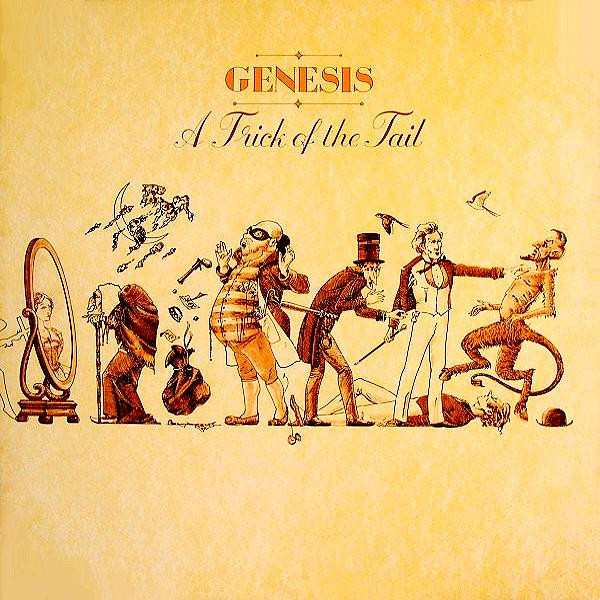
A Trick of the Tail (1976) was the first post-Gabriel record, and it was better than anyone had a right to expect. Collins’ voice was different from Gabriel’s, warmer, less theatrical and more emotionally direct, and the band wrote to his strengths. The album reached No. 3 in the UK. The critics who had predicted collapse were wrong.
Wind and Wuthering (1976) followed, and then Steve Hackett departed in 1977. His guitar playing had been one of the defining textures of the Genesis sound, from the classical fingerpicking to the sustained harmonics and the melodic leads that sat somewhere between rock and chamber music. What remained was Banks, Rutherford and Collins, a trio that would become one of the most commercially successful acts of the next decade. Hackett has kept the early Genesis catalog alive on stage ever since, and we reviewed his 2019 Genesis Revisited tour show at the Copernicus Center.
The Commercial Peak: 1978 to 1992
…And Then There Were Three… (1978) was the first album as a trio and gave the band its first real pop hit in “Follow You Follow Me.” Duke (1980) reached No. 1 in the UK and began a run of five consecutive UK chart-toppers. Abacab (1981) pushed further toward a stripped-down, rhythm-driven sound that owed more to Collins’ concurrent solo career than to the prog era.
Genesis (1983) and Invisible Touch (1986) completed the transformation. Invisible Touch reached No. 1 in the UK and No. 3 in the US, sold six million copies in the US alone, and produced five US top five singles, making Genesis the first band and foreign act to achieve that from a single album. The band that had recorded “Supper’s Ready” was now filling stadiums with pop songs. Depending on your perspective, this was either a triumph of adaptability or a betrayal of everything that made them interesting. The argument has never been resolved.
We Can’t Dance (1991) was the final studio album with Collins. He departed in 1996 to focus on his solo career and personal life.
The Post-Collins Years and the Reunion
Genesis continued with Ray Wilson as vocalist for Calling All Stations (1997). It reached No. 2 in the UK but only No. 54 in the US, drew mostly negative reviews, and effectively ended the band’s commercial run. A planned American tour was canceled for lack of ticket sales, and the group disbanded after its 1998 European dates.
Banks, Rutherford and Collins later reunited, first for the Turn It On Again tour in 2007 and then for The Last Domino? tour in 2021 and 2022. Collins sang from a chair because of nerve damage and a spinal injury that left him unable to play drums, and his son Nic took over the drum seat. Gabriel did not take part. The tour was billed as a farewell.
Whether it actually was remains an open question. Genesis have a history of endings that turn out not to be endings.
What Genesis Left Behind
Five decades. Fifteen studio albums across two distinct eras. A catalog that contains both “Supper’s Ready” and “Invisible Touch” and somehow makes both feel like the work of a band that knew exactly what it was doing.
And a tradition of between-song stories that began as a way to fill time while the instruments were retuned and became as much a part of rock history as anything on the records. That is not nothing. That is, in fact, remarkable.
Genesis FAQ
When did Genesis form? Genesis formed in 1967 at Charterhouse School in Godalming, Surrey, England. The founding members were Peter Gabriel, Tony Banks, Mike Rutherford, Anthony Phillips and Chris Stewart.
Why did Peter Gabriel tell stories between songs? The band’s instruments had to be retuned between songs, and Gabriel filled the gaps by talking to the audience. The stories grew into one of the most celebrated parts of a Genesis show.
Why did Peter Gabriel leave Genesis? He left in 1975 after the Lamb Lies Down on Broadway tour. His wife’s difficult pregnancy, a film project with director William Friedkin and tensions within the band all played a part.
Who replaced Peter Gabriel in Genesis? Phil Collins, the band’s drummer since 1970, became lead vocalist after the band received hundreds of replies to an ad for a new singer and found no one who fit.
What is Genesis’s best-selling album? Invisible Touch (1986) is their highest-selling album, with six million copies sold in the US. It made Genesis the first band and foreign act with five top five US singles from one album.
How many studio albums did Genesis make? Fifteen, from From Genesis to Revelation (1969) to Calling All Stations (1997).
Did Genesis ever reunite? Yes. Banks, Rutherford and Collins reunited for the Turn It On Again tour in 2007 and The Last Domino? tour in 2021 and 2022. Peter Gabriel did not take part.
What is the best Genesis album to start with? For the progressive era, start with Selling England by the Pound (1973) or go straight to “Supper’s Ready” on Foxtrot (1972). For the pop era, Invisible Touch (1986) or Duke (1980) are the entry points.