Derek Moore is the last original member of the prog rock band Nektar. The band was formed in Hamburg, West Germany, in 1969. Founding members were Englishmen Roye Albrighton on guitars and lead vocals, Allan “Taff” Freeman on keyboards, Derek “Mo” Moore on bass, Ron Howden on drums, and artists Mick Brockett and Keith Walters on lights and “special effects”. It was atypical that part of Nektar’s lineup had no role in performing or writing their music. During their early years, the band’s songwriting was credited to five members, including Mick Brockett, but BMI records show that the four performing members wrote the music even though Mick Brockett, Derek Moore, and Roye Albrighton wrote all of the words between them.
The band’s debut album, Journey to the Centre of the Eye (1971), comprised a single song running over forty minutes, with the last portion of the first side repeated at the beginning of the second side to maintain continuity. It was a concept album, following an astronaut who is given overwhelming knowledge by extraterrestrials, with hints of psychedelic rock. The sophomore album, A Tab in the Ocean (1972), had more conventional rock and blues influences. Walters had left by the time of their third album, the heavily improvised double album …Sounds Like This (1973), though the band would continue to use his slides in their shows. Album designs were all by Helmut Wenske from Tab in the Ocean on.. A cult following grew for the band, based largely on word of mouth.
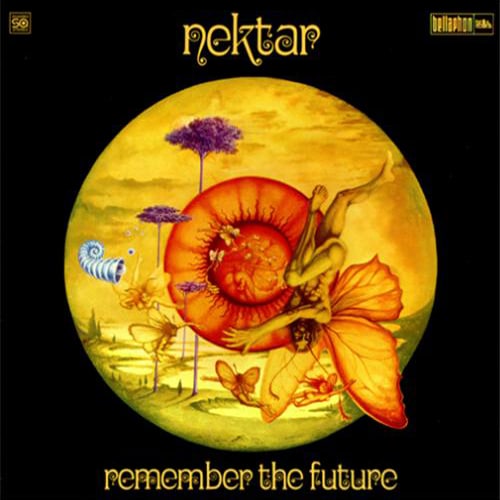
Nektar’s U.S. release, Remember the Future (1973), propelled the band briefly into mass popularity.
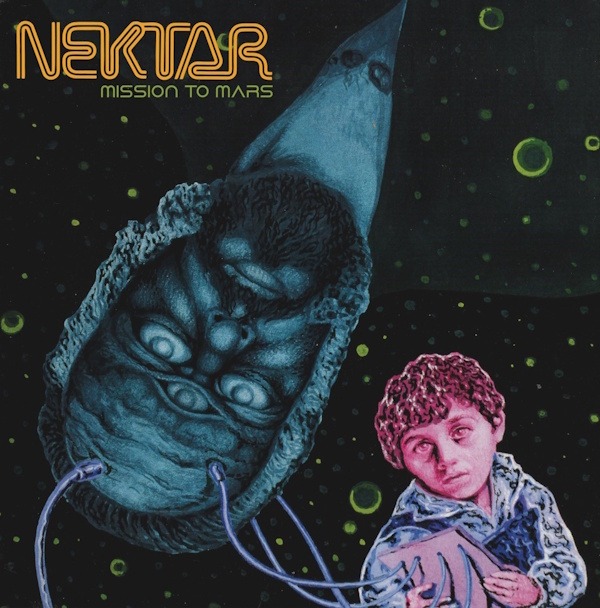
Nektar’s latest release, Mission To Mars, is the first in a trilogy and the first to feature new drummer Jay Dittamo, alongside longtime members Ryche Chlanda (guitars, vocals), Kendall Scott (keyboards, synths), Maryann Castello (vocals) and original founding member Derek “Mo” Moore (bass guitar, vocals). Nektar melded those aforementioned traits with the soothing mellowness and adventurous jamming of Camel, the Grateful Dead and Caravan. Nektar’s knack for thought-provoking concepts and entrancing music has rarely wavered and is just as evident on Mission To Mars.
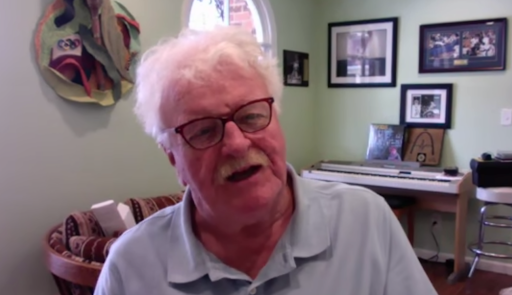
Derek joined me for a wide-ranging conversation about the origins of the band, the music business, and the new Mission to Mars project. The timing matters: Nektar’s 2026 run of dates is billed as “MO’s Farewell Tour” — Moore’s final series of live performances before he retires from touring.
“With the K for the Hard Rock”: Forming Nektar in Hamburg
Steve Leventhal
What was your musical inspiration? What made you want to be a musician?
Derek Moore
Oh, my sister Sheila. She played classical music. And when I was seven, I asked her to teach me to play. So I started playing piano, and then when I was about 16, I was in my first band, and the bass player left, so it was either play bass, or we didn’t have a band. The piano playing helped me a lot because I know what’s in a chord, what notes are in a chord. You could play any note that’s in the chord, and it’ll work
Steve Leventhal
And what was your first band?
Derek Moore
My first band was Dane and the Invaders. Many years ago. I was sixteen.
Steve Leventhal
So tell me about how Nektar came about. You’re obviously not German, so how did you end up in Germany, and how did you guys form the band?
Derek Moore
Well, we went to Germany to play. We actually went to France to play, and then left France and went to Germany. And in Germany, the people who came to the concerts wanted to hear anything new. Anything that you were playing that wasn’t pop music, they were interested in. We were in Hamburg. The band was called Prophecy, and Colin Edwards, our guitarist, left the band to go home to England. So I sent a note to Roye Albrighton, who was in Sweden at the time, and I said, “We need a guitarist. Are you interested?” And he said, “Yes.” So I sent him some money, and he came to Hamburg, and without playing at all, we did a gig because that’s how we got our money, through gigging. It went really well.
We said if it doesn’t go down well, we’ll call the band Pollen. If it does go well, we’ll call it Nektar. And it went down really well, and this reporter said to me, “What’s the name of the band?” I said, “Nektar.” “So how do you spell that?” he asked. I said, “With the K for the hard rock.” That’s how it came about. Then we had Nektar, and we started when we went from playing one-month residences in clubs like the Star Club or PN Club in Munich. The clubs, you played there for a year, or for a month, and we broke out of that and started doing gigs, playing one-night shows. It got very, very popular. We would play in a club where we weren’t known, and the owners wanted to just pay us whatever came in the door. And after the first time we played, the next time we went back, it was jam-packed to the gills. Then they wanted to give us a fee.
It was good, and then Mick Brockett, whom we got together with in Nuremberg at a gig down there called the Camera Club. He showed up in Hamburg, and we’d been talking about doing a Music and Light Theater for a long time. I said, “Well, where’s your stuff? Let’s go.” So he got his equipment, and we did a gig. And I said, “Well, we have a light show.” And I don’t remember how much I asked for the light show, but maybe a couple hundred (German) marks. I said to the club owner, “We have a light show. And it’s two hundred marks.” It’s a long time ago. And he said, “No, we’ve got a light show.” I said, “I’ll tell you what. We’ll do the light show, and if you don’t like it, you don’t have to pay for it.” Of course, he was thrilled with that. But afterwards he would have paid us double if we’d have asked him, because the show with the music and the lights was very intense at the time. Very new, very new.
Steve Leventhal
How did this how did the growth come about? Was it word of mouth? Did you get written up in some of the local media?
Derek Moore
The growth came about from getting written up in the media, and we played every small place we could play. And when you play enough small places around, when you play the central in town, it fills. I mean, we were pulling more people than most everybody who played in Germany. We were pulling all kinds of people. We were playing big halls. And it all came about through word of mouth, somebody seeing the band, and then the word travels. The record company told us that they could see where we were playing by the record sales. So as we go up to Germany, the record sales would follow us.
Steve Leventhal
So we’re talking about (the band’s 1971 debut) Journey to the Center of the Eye?
Derek Moore
Journey to the Center of the Eye was the first one, and then A Tab in the Ocean. We were already playing a lot of this stuff live before we recorded it. Journey we would play in its entirety.
Steve Leventhal
The whole thing was one song, right?.
Derek Moore
It was one song. Yeah, it was one song. Forty-six minutes, if I remember rightly.
“They Were Shouting for Us”: Uriah Heep, Zappa, and the Festival Years
Steve Leventhal
So, did you get any gigs where you were opening for a bigger band, or were you guys just headlining?
Derek Moore
We were mainly on our own. We did a gig with Uriah Heep and Silverhead. We actually did four gigs. It was supposed to be in Germany. Silverhead didn’t want to go on first. And I said, “I don’t care if we go on first. I don’t care where we play. If you want us to go on first, we’ll go on first.” So we went on first, and then they were shouting for us all the way through both sets. So then we went on second, and they were shouting again through both sets. And on the third night, they put us on at the end after Uriah Heep, and they were still shouting for us, so they wouldn’t let us play anymore.
Steve Leventhal
That’s a big band’s worst nightmare.
Derek Moore
Well, I didn’t care. We just wanted to play. We didn’t want to have the disruption, but you can’t very well go on another band’s time and say, “Hey, you know, let’s have no more disruption.” But we really got on with Uriah Heep. They were a great band. I really liked them a lot. But our fans wanted what we were doing. So we didn’t play a lot with other bands. We headlined big festivals, huge festivals, and the other bands would say, “Who’s this band?”
Steve Leventhal
Now, was this all in Germany, or did you start to expand further?
Derek Moore
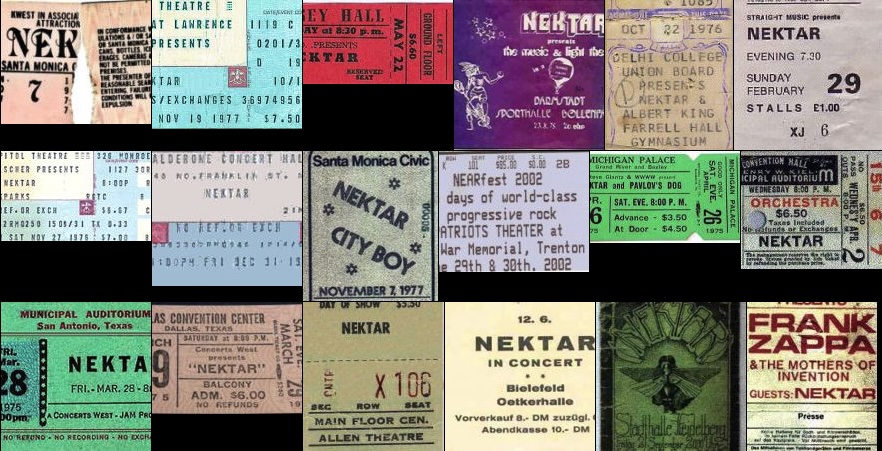
Well, we played mainly in Germany, but we played in Belgium, France, Luxembourg, and Italy. We toured through Europe with Zappa. Which was great.
Steve Leventhal
What was that like?
Derek Moore
Oh, it’s fantastic. Fantastic. He had the Over-nite Sensation band, and it was a great band. Featuring Frank Zappa, guitar; George Duke, keyboards; violinist Jean-Luc Ponty; drummer Ralph Humphrey; Ruth Underwood, xylophone; Ian Underwood, wind instrumentalist; Tom Fowler, bass; and Bruce Fowler, trombone. All excellent musicians. We played all through Europe with him. He really liked the band. He wanted us to be on his label, but it didn’t work out. He was a big fan of the band, you know.
Steve Leventhal
I would say if anybody could appreciate what you were doing, it would have to be Frank Zappa because he’s such a music connoisseur.
Derek Moore
It’s unbelievable. He doesn’t do any drugs whatsoever. Right. He’s straight as a die. Well, as if you could call it straight as a die. But he is a fantastic musician. They were a fantastic band, and they used to stand by the stage and watch us, and we would stand by the stage and watch them. It was mutually agreeable.
Steve Leventhal
Yeah, I’ve always said when he passed, there are a lot of bands out there, and people can cover them. But I guess his son is the only one who could really replicate what he did in concert.
Derek Moore
Well, he would do things that you wouldn’t think about. When we played Italy and were in Rome. For his encore, when he came on stage, the band played “Arrivederci Roma”. But dead straight, orchestral version. And then maybe three minutes in, it changed it to a Zappa version, and the crowd went nuts. They went absolutely spare. It was great. That was one of my favorite tours.
Steve Leventhal
And when did you finally make it back to England to play?
Derek Moore
We used to go fairly often. Two or three times a year for sure. But in the beginning, it took a while to build up because they were more interested in pop music than what we were doing. But we had a staunch following. We did very well. But it took a while for people to realize what it was we were doing. We just played England. Not last year, the year before. We headlined a festival in England, and it was great. And last year we had a festival in Italy, which was also great. I would like to do more festivals in Europe and over here. I think the band needs the exposure, you know.
Steve Leventhal
As an aside, one of the issues I’ve seen is that there are so many festivals that they’re competing against each other, and unfortunately, the result is less attendance. Not because the festival isn’t good. Everybody’s got limited dollars, and also, you’re gonna have to lay out three or four hundred dollars for a festival; how many of those can you do?
Derek Moore
Right. So it’s sad, but the problem is the young kids today, they don’t support music. They don’t support anything. They don’t buy music unless they get it from Spotify. And you need about a million streams to get any money from Spotify. And they don’t go to the movies; they wait until it comes on TV. As I said, they listen to Spotify because it’s almost free, comparatively, and I think that hurts music. The people who are playing music and making records of any kind aren’t really making any money, unless you’re the Rolling Stones. Even the Rolling Stones had trouble. And the Who.
Steve Leventhal
It’s a different dynamic now. Believe me, I’m in the middle of it. I found the same thing with radio.
Derek Moore
I know exactly where you’re coming from. The only way to make money as a band is through merchandise and live performances.
“We Only Had Five Days”: Making Remember the Future
Steve Leventhal
That’s all that’s it. It’s a new dynamic. So let’s talk about Remember the Future because that was the first time I had ever heard of the band, and what a fantastic album it is.
Derek Moore
Thank you. Yeah, it was a lot of fun making it. We only had five days to make it. And we worked around the clock. We did a 72-hour session, a couple of 36-hour sessions. We used every bit of those five days that we got to record it. Then we went to a different studio to mix it because they didn’t have any room for us to do it in Chipping Norton Recording Studios, where we were. So we took Barry Hammond with us, the engineer, and we went to another studio up in London to mix it. But it turned out that their speakers were out of phase. And the first albums that came in, the guitar had almost disappeared. So Roye and I ran to Dieter Dierks studio in Pulheim-Stommeln in Germany, and Barry Hammond flew over, and we remixed it, and we mixed it in quad. What a sound. The sound in the studio was intense. I’d never heard quad before. We were one of the first ones to do anything in quadrophonic. And then it got released, and it did really well. It was album of the year in Germany, and it reached, I think, number 17 or 19 over here. Certainly, it gained a lot of airplay on WNEW. It was getting a ton of airplay on KSHE Rock Radio in St. Louis. It was just at the right time. If anything could have said it was the right time, it was the album.
Steve Leventhal
Well, ‘73, ‘74, that’s really the heart of progressive radio and progressive rock. What was it like to be a part of a renaissance of the whole progressive rock movement?
Derek Moore
We thought it was great. We were touring to packed houses. We were playing on our own. We had no support band; it was just us, and it was great. We did a couple of shows in New York at what was then the Academy of Music. Now it’s called the Palladium Nightclub. In St. Louis, we did four shows at the Ambassador Theatre, 3,000 each night. And we still hold the record for that because they knocked it down. The next time we went back, we played at Kiel Auditorium. That held about 15,000. And we did two nights there. We were huge in St. Louis. We’re still well known. We still get a lot of people when we play St. Louis. We don’t get 30,000 people, of course. Most of them have died by now.
Steve Leventhal
Yeah, don’t remind me. I’m always checking every day who’s around or who passed, and it’s kinda scary in some sense. So you had a couple more albums out. Any interesting stories with either Recycled or Magic as a Child?
Derek Moore
Recycled we played in the Château d’Herouville in France, and the place was incredibly out of touch with what’s new. It looked like wire central and cables everywhere, and finally, when we got the music down, we left the studio and went to Air Studios in London. And what a difference. You’re playing from the worst to the best, you know. And we did all the vocals there. We dubbed on the choir. Funnily enough, Christian Kolonovits, who was one of the artists on the Bellaphon Bacillus label. He was a brilliant musician. And I said, “I want a choir on here.” And he wrote the score and we needed a tape recorder so he could play it and do it in the hotel room. Well, Vangelis is a huge friend of mine and Ron’s. We used to play with him in Greece years ago, and we got him up, and we said, “Can you lend us a tape recorder?” He said yes, so Ron ran over there, got the tape recorder, and he said, “Be sure to bring it back, because I leave it at the side of my bed in case I get an idea, you know.” And Christian did the choir, and then the next day we went into the studio, and the choir couldn’t sing to the music because it wasn’t in perfect pitch. And probably 80% of them had perfect pitch, so they couldn’t sing anything other than perfect pitch. Well, the reason that that happened is we had a Hammond organ, and the Hammond organ at that time varied a little bit depending on what the power was going in. So we used to have a strobe tuner that you used for trumpets and clarinets. We would put it on the organ, and he would play the notes on the organ, and we’d tune the strobe tuner to the organ, and then we’d do our guitars. And that way we were in tune, but we weren’t in perfect pitch. So what we had to do was increase the track just a little bit until we got it to perfect pitch. And then the choir sang all their parts, and then we put it back to where it was.
Steve Leventhal
Yeah, now you sit there with the computer, click a few buttons, and kaboom.
Derek Moore
Yeah. It wasn’t that much, but it was enough.
Steve Leventhal
Which brings me to an interesting question. Think about the technology back then versus what you have now, and how much would it change what you are able to do?
Derek Moore
You don’t need a Hammond organ anymore. You can get that out of a synthesizer no problem.
It sounds identical. We have a studio in South Jersey, and we play there, we record there. They’ve got everything analog except for the recording. The recording’s digital. Absolutely fabulous place. On Mission to Mars, we did all the music in two days. It took us about five days with the other side.
“There’s No Filler”: Mission to Mars and the Band Today
Steve Leventhal
Since you brought up Mission to Mars, let’s talk about that, because that’s really the reason why we’re having this conversation.
Derek Moore
Ryche (Chlanda) and I wrote 90% of it, well, 80% of it, and Kendall (Scott) wrote a couple of tracks with us. And that’s gonna be a trilogy. Once we can get the money together to do the other parts, we’re probably gonna do the next two songs together. The next two albums at one time because it’ll be less expensive to do it that way. But on Mission to Mars, there’s no filler. It’s all full music. We just played a couple of gigs in Long Island, New York, and in New Jersey. We played the entire album, and people loved it. It’s a good it’s a good album. I wish it would get more exposure. But it’s growing, as you say. We’ll have to see what we can do.
Steve Leventhal
I guess what I should have really asked from the start was, who are your musical influences?
Derek Moore
The biggest musical inf influence in my lifetime is the Beatles. And just about any musician you could ask will tell you that the Beatles had some influence. We liked Vanilla Fudge, and we liked The Moody Blues. We liked a lot of different bands, but the biggest influence, especially in the music writing, was the Beatles because they taught us that we could write our own music. It was okay to do that. It wasn’t okay to do that until they came on the scene. I don’t know if you realize that
Steve Leventhal
Well, I’m really a true baby boomer. Whether it was the Beatles or a few people who were just in that group, maybe some of their influences were Buddy Holly or Chuck Berry, and the early rock and rollers.
Derek Moore
Buddy Holly influenced the Beatles somewhat. We used to play Buddy Holly tracks back in the day. It was great stuff. It was going gangbosses until he died in the airplane crash. Terrible, terrible. But I know that the Beach Boys were watching what the Beatles were doing, and the Beatles were watching what the Beach Boys were doing. Certainly, Pet Sounds was a big influence on some of the Beatles’ stuff. But if you listen to the intricacies in the music of the Beatles, it’s just incredible.
Steve Leventhal
Well, Paul McCartney famously said that Pet Sounds made him up his game.
Derek Moore
Yeah, absolutely, and what they did made us up our game. Our music is very musical. It’s not odd. It’s pleasant to listen to. You’ve got to have the musical part. My bass playing is influenced by classical music. I like cello parts. So a lot of my bass parts are actually cello parts. If you listen to Remember the Future, you’ll hear that. We love to play. The band we’ve got right now is really strong. Ryche Chlanda and I have played together since 1978. And when it came to putting the band back together, he was my first phone call. Ron (Howden) called me, and the drummer, and he said, “Do you want to put the band back together?” And I said, “Sure.” My first phone call was to Ryche Chlanda because we’d written a lot of music back in the day, back in ’78, and we went into the studio, and it all came together really fast, and then we added Randy Dembo as a second bass player because I didn’t really intend to go out on the road. I thought he could go out on the road, and he ended up staying, and we had two basses. Sometimes he would play a 12-string guitar and sometimes bass. And then we had Kendall Scott, who used to be with Project Object, a Zappa-type band. He’s a great keyboard player, and then when Ron died a couple of years ago, we added Jay Dittamo. Jay has played for everybody, including Zappa. Ron asked him, and he said, “If ever I can’t play, I want you to play for me.” And I said, “Don’t worry about it. You play, you do your thing.” But eventually, when he died, we did auditions, and the first couple of people that came, they were good, but one of them, I think we would have taken if Jay hadn’t just showed up. I closed my eyes, and it was like playing with Ron. And I’ve played with Ron for sixty years. Wow.
Steve Leventhal
Amazing. And how is it? None of us is getting any younger, but what’s it like going out to play? Do you still enjoy it?
Derek Moore
Yeah, I enjoy it. Not as much as I used to like it. If we could just show up and play, wiggle your nose, and go to the next game, I would be all for it. But the travel, it just wrecks you. You’re traveling in a bus, somebody’s bound to get sick, everybody’s bound to catch it, wherever it is. If it wasn’t for the fans, I wouldn’t go out. I like to meet people. We’ve got a lot of people out there that love us. That want to hear the band. Want to hear the new music. And we want to play it for them. So that’s why we’re out on the road. That’s great. We’ve only done a couple of gigs this year.
Nektar – “Mission to Mars” (official lyric video)
Nektar official website | Tour dates for MO’s Farewell Tour
More conversations from our interviews & articles archive: Kevin Godley of 10cc, Al Stewart, and our review of Steve Hackett live in Chicago.